
As of September 2026, Red Sea shipping is in a unique phase: on one hand, some major container shipping lines have begun resuming operations on the Red Sea–Suez Canal route; on the other, the military activities of Yemen’s Houthi forces along the Red Sea coast and near the Bab el-Mandeb Strait have escalated once again, requiring shipping companies to continue assessing risks on a voyage-by-voyage basis.
Consequently, it is inaccurate to simply state that Red Sea shipping has fully recovered, nor is it correct to assume that all vessels are still diverting around the Cape of Good Hope. For shippers exporting goods from China to Europe, the Mediterranean, North Africa, and parts of the Middle East, the central issue in September has shifted from the general question of “whether to transit the Red Sea” to the specific question of whether individual shipping lines, routes, and voyages have resumed passage through the Suez Canal.
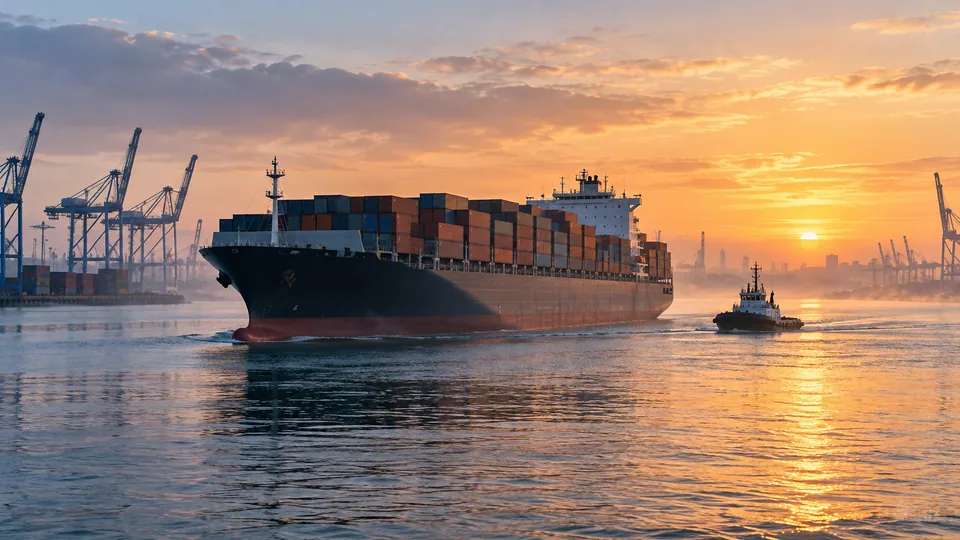
What is happening in the Red Sea in September 2026?
In September 2026, the situation in the Red Sea once again drew attention. Around September 10, Houthi forces advanced along Yemen’s Red Sea coast, seizing control of Mokha and certain strategic areas near the Bab el-Mandeb Strait. This development has once again focused the international shipping industry’s attention on the security of the Bab el-Mandeb Strait, a vital link between the Red Sea and the Gulf of Aden. Reuters reported that this shift could directly impact a crucial global maritime shipping lane.
At the same time, however, some container shipping lines are gradually resuming routes through the Suez Canal. In September, Maersk and Hapag-Lloyd announced the restoration of additional Asia-Europe services—with some routes once again transiting the Suez Canal—while COSCO and OOCL also increased their use of Red Sea routes by mid-September.
This indicates that the current Red Sea shipping market is not moving in a single direction; rather, it presents a scenario characterized by “partial recovery alongside persistent risk.”
Are ships using the Suez Canal again?
Yes, but the resumption of traffic remains limited.
On September 16, the Suez Canal Authority confirmed that the OOCL Portugal—a large container ship operated by COSCO—had passed through the canal, marking a significant signal that large container vessels are returning to this route. The Authority also reported that the total net tonnage of container ships passing through the canal during the first eight months of 2026 reached approximately 72.1 million tons.
Data from Sea-Intelligence also indicates that, in September, some container shipping capacity on the Asia-Europe trade lane began returning to the Red Sea and Suez Canal routes. According to their statistics, approximately 27% of the relevant container capacity (considering both directions) had “returned to the Red Sea” by September.
However, this does not mean that all shipping lines have returned to normal operations. Carriers continue to adjust their routes based on security conditions, with some services still opting to divert around the Cape of Good Hope. Consequently, when booking cargo, shippers should not rely solely on headlines stating that the “Red Sea [has] reopened”; instead, they should verify the specific routing arrangements of the actual carrier.
Why are shipping lines returning to the Red Sea?
The most immediate reasons are time and operating costs.
Previously, when vessels diverted around the Cape of Good Hope in Africa, the voyage distance increased significantly. This not only extended shipping times between Asia and Europe but also drove up operating costs related to fuel, vessel usage, and crew.
Resuming transit through the Red Sea and the Suez Canal can substantially shorten the voyage between Asia and Europe. In a market update from September, DHL noted that using the Suez Canal route saves approximately two weeks of transit time and reduces fuel consumption by about 30% compared to the Cape of Good Hope route.
For shipping companies, the cost pressures of continuing to divert around the Cape of Good Hope for the long term mount as factors such as fuel costs, vessel utilization rates, and port congestion shift. Consequently, some shipping lines have begun to resume operations via the Suez route.
Why is the Red Sea still considered risky?
The primary reason remains the security situation in the Bab al-Mandab Strait and along the coast of Yemen.
In September, Houthi forces expanded their control along the Red Sea coast—including areas such as Mokha and islands near the Bab al-Mandab Strait—increasing uncertainty for commercial vessels transiting the region. Meanwhile, attacks targeting Saudi Arabia have further complicated the security environment across the entire Red Sea area.
The impact varies depending on the type of vessel. For instance, data from S&P Global on September 17 showed a marked decline in the transit of large crude oil tankers through the Bab al-Mandab Strait; notably, no Very Large Crude Carriers (VLCCs) had passed through the strait since September 9.
Consequently, even though container ships have begun to partially resume Red Sea routes, this does not mean the broader shipping market has returned to pre-crisis conditions.
Red Sea shipping vs. Cape of Good Hope routing
Currently, there are primarily two routes for shipping goods from China to Europe by sea:
| Routing | Main Route | Main Advantage | Main Concern |
|---|---|---|---|
| Suez Canal Route | China → Red Sea → Suez Canal → Europe | Shorter transit time | Security risk |
| Cape of Good Hope Route | China → Cape of Good Hope → Europe | Avoids Red Sea | Longer transit and higher fuel cost |
If a shipping company confirms that a specific voyage can safely transit the Red Sea and the Suez Canal, the transit time is usually more advantageous than routing around the Cape of Good Hope. However, if the company makes a last-minute route adjustment, cargo originally scheduled to pass through the Suez Canal may still be rerouted.
What does this mean for shipping from China?
For Chinese exporters and importers, the most important consideration in September is to avoid scheduling deliveries based solely on standard transit times.
For instance, a shipment from Shenzhen, Ningbo, Shanghai, or Qingdao to Europe might be scheduled based on the relatively short Asia-Europe transit time if the carrier plans to use the Suez Canal route. However, if the voyage is unexpectedly rerouted via the Cape of Good Hope, the Estimated Time of Arrival (ETA) could change significantly.
Therefore, when booking shipments, it is advisable to verify the following details:
- Actual shipping line
- Planned routing
- Estimated transit time
- Suez Canal vs. Cape of Good Hope routing
- Potential war risk or emergency surcharges
- Final destination port
- Latest ETA prior to shipment
This is particularly crucial for time-sensitive shipments—such as machinery, seasonal goods, e-commerce inventory, and project cargo—where a buffer should be factored into the transit schedule.
Will shipping rates be affected?
Changes affecting Red Sea shipping routes could also impact ocean freight rates.
If more vessels resume transiting the Suez Canal, the need for the extra fuel and time associated with detouring around the Cape of Good Hope could theoretically be reduced, thereby alleviating some operational costs.
However, factors such as security risks in the Red Sea, insurance costs, route adjustments, and ad-hoc schedule changes by carriers could all generate additional expenses. Consequently, ocean freight quotes for September may still vary significantly depending on the carrier, ports of origin and destination, cargo type, and the specific route taken.
When comparing quotes, shippers should not focus solely on the ocean freight rate; they must also verify whether the quote includes potential surcharges and confirm which route will be used.
What should importers do in September 2026?
For clients currently preparing shipments from China, there are several practical measures to consider.
First, confirm the shipping route in advance. Do not assume that all Asia-Europe services will transit via the Suez Canal, nor that all vessels will automatically divert around the Cape of Good Hope.
Second, if the shipment is time-sensitive, inquire about service options from different shipping lines. For instance, one route might be scheduled via the Suez Canal while another continues to divert around the Cape of Good Hope; the transit times and risk profiles for these options could differ significantly.
Third, continue to monitor the schedule after booking. The situation in the Red Sea changes rapidly; even if a booking indicates a Suez routing, the actual voyage plan may be adjusted based on security conditions.
Finally, for large shipments, consider splitting the cargo based on delivery deadlines. For example, you could ship a portion by sea and send time-critical items by air, thereby mitigating the impact on the overall supply chain should delays occur on a single route.

How can a freight forwarder help?
In the current market environment, the role of a freight forwarder extends beyond merely providing ocean freight rates; it involves helping clients evaluate shipping options based on specific routes.
For exports from China, forwarders can compare services across different shipping lines—considering factors such as ports of origin and destination, cargo type, volume, and delivery schedules—and verify whether a scheduled voyage will transit the Suez Canal or continue to divert around the Cape of Good Hope.
As a Chinese freight forwarder, SYNHOPE LOGISTICS assists clients in arranging sea and air freight, as well as logistics transport to various destinations. For shipments bound for regions like Europe, the Middle East, and North Africa—which may be affected by disruptions to Red Sea routes—confirming the actual routing and estimated time of arrival (ETA) prior to booking is crucial.